Getting Your Fish Home: Processing, Boxes and Shipping from the Kenai
The best part of an Alaska trip is eating it all winter, so plan your fish logistics before you land in Anchorage.
October 27, 2026 · 4 min read
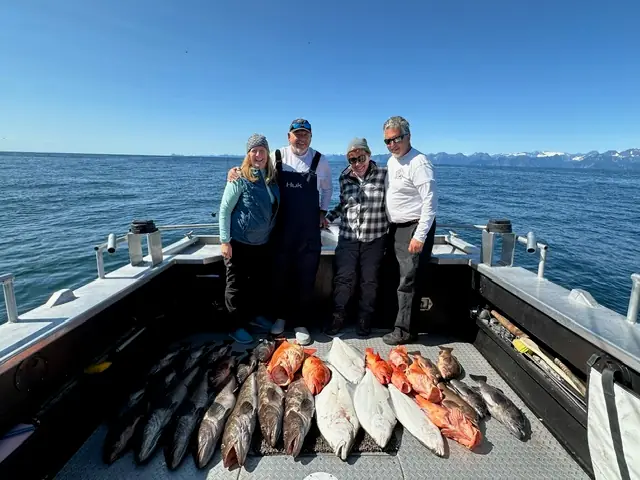
Every guest asks the same thing sooner or later: how do I get my fish back to my freezer at home? The answer is simpler than most people expect, but it helps to understand the steps and the costs before you start packing. Here is how it works at our fish house.
From the boat to the fish house
Every group gets a tote to carry its harvested fish. When you get back to the resort, the fish goes to our onsite fish house, where we fillet, vacuum seal, freeze and box your catch. One guest wrote that the crew cleans, processes and freezes your catch, and that is a good picture of the routine. You enjoy your evening, and the work happens while you do.
What your package includes
Package guests get 50 to 100 pounds of processing per person, depending on the package, along with one or two insulated, airline-approved boxes. Past what your package covers, here is how the charges work:
- Processing beyond your included pounds: $2.50 per pound.
- Additional boxes: $35 to $45 per box.
- Filleting fish you caught on your own, outside a guided trip: $5 per fish.
Extra processing and boxes can be settled at the end of your stay, along with your final billing.
Airline or FedEx
You have two realistic ways to move a frozen box of fish. For the best value, many people check it as an added piece of luggage. On most airlines, you can take up to 50 pounds of fish this way for roughly $35 to $60. Airlines change their baggage rules, so check your carrier before you book your ticket.
The other option is overnight shipping with FedEx. It is expensive, typically over $350, and the shipping fees are yours to pay. One guest wrote that we arrange overnight FedEx to get their fish home securely, so it is something we can set up, and it can make sense for a big haul or an awkward itinerary.
One honest note: airline delays, lost baggage and late fish boxes are outside our control. If your flight home has tight connections, think about that before you choose how the box travels.
Do the box math before you rent a car
A box for 50 pounds of fish measures 34 by 12 by 11 inches. That sounds modest until you picture a group of four with two boxes each in the trunk of a compact rental. You will need a car in Alaska to reach the resort, the halibut launches, Seward and the fly-out flights, so choose a vehicle with room for your boxes along with your luggage.
We recommend looking at rental locations off the airport. You can save hundreds of dollars and often get unlimited miles and discounted weekly rates, and the details are given when you book.
Only legal limits leave Alaska
You can only leave Alaska with your allotted legal daily limits. Those limits are set by the Alaska Department of Fish and Game and, for halibut, by federal rulings from NOAA, and they can change at any time, sometimes several times a year. King salmon limits are determined on arrival. Historically, the daily limit has been two halibut, one of any size and one under 27 inches, but please treat that as background and check the current rules before you fish.
Small habits that make better fish
What happens on the water shows up on your plate. A few things are worth doing every trip:
- Bleed your salmon right after you land it. Bring a knife for that job if you fish from the bank on your own.
- Keep fish in the shade and cool, and get them to the tote rather than leaving them on the boat deck in the sun.
- Tell the fish house crew which fish came from which angler or trip, so your boxes come out the way you expect.
- Keep your own fish count in mind for each person, so you know where you stand against the legal limits.
Taste it before you box it
Save a little for dinner. Our Wednesday night fish fry and BBQ is included in the packages, and one guest wrote about a meal of hamburgers, salmon, halibut and french fries. It is an easy way to eat your trip while the fish house works on the rest.
A simple checklist
- Estimate how many pounds your group might bring home.
- Decide between an airline checked box and FedEx.
- Call your airline about weight limits and fees.
- Book a rental car with enough trunk room for your boxes.
- Plan for extra processing and boxes beyond what your package includes.
If you want to talk through the plan for your group, call us at 1-800-625-2324.
Kenai Riverbend Resort, 1-800-625-2324
Call 1-800-625-2324More articles
When to Come to the Kenai: Picking Your Weeks for Sockeye, Silvers, Halibut and Seward
The fish change a lot between the first of June and the middle of September, so the week you choose shapes the trip you get.
What to Pack for a Week of Fishing on the Kenai
Cool mornings, warm afternoons and a day on open water can all land in the same week, so here is what we tell our guests to bring.